


2026年04月08日
In classical Eastern tea philosophy, there is an ironclad warning: Cha Xing Wei Zhi (茶性畏紙)—"Tea nature fears paper."
Tea is a highly sensitive receptor; it breathes, it absorbs, and it easily forgets its origin if exposed to interference. Traditional handmade paper, born from water and plant pulp, carries its own residual moisture and raw, earthy odors. To wrap premium tea in paper was considered a sensory disaster. The paper would slowly exhale its humidity into the leaves, muddying the tea's original frequency and suffocating its true aroma. Paper was not a protector; it was "noise" that distorted the tea's signal.
As Taiwanese tea began to step onto the global stage in the 19th century, the island’s tea merchants faced a paradox: how to export the island's exquisite terroir without destroying it in transit? The answer lay in the ingenuity of local artisans and the birth of a cultural icon—the Four-Square Wrap (sì fāng zhǐ bāo).
This innovation gave rise to a whole new category of Taiwanese tea: Baozhong (包種), which literally translates to "The Wrapped Kind."
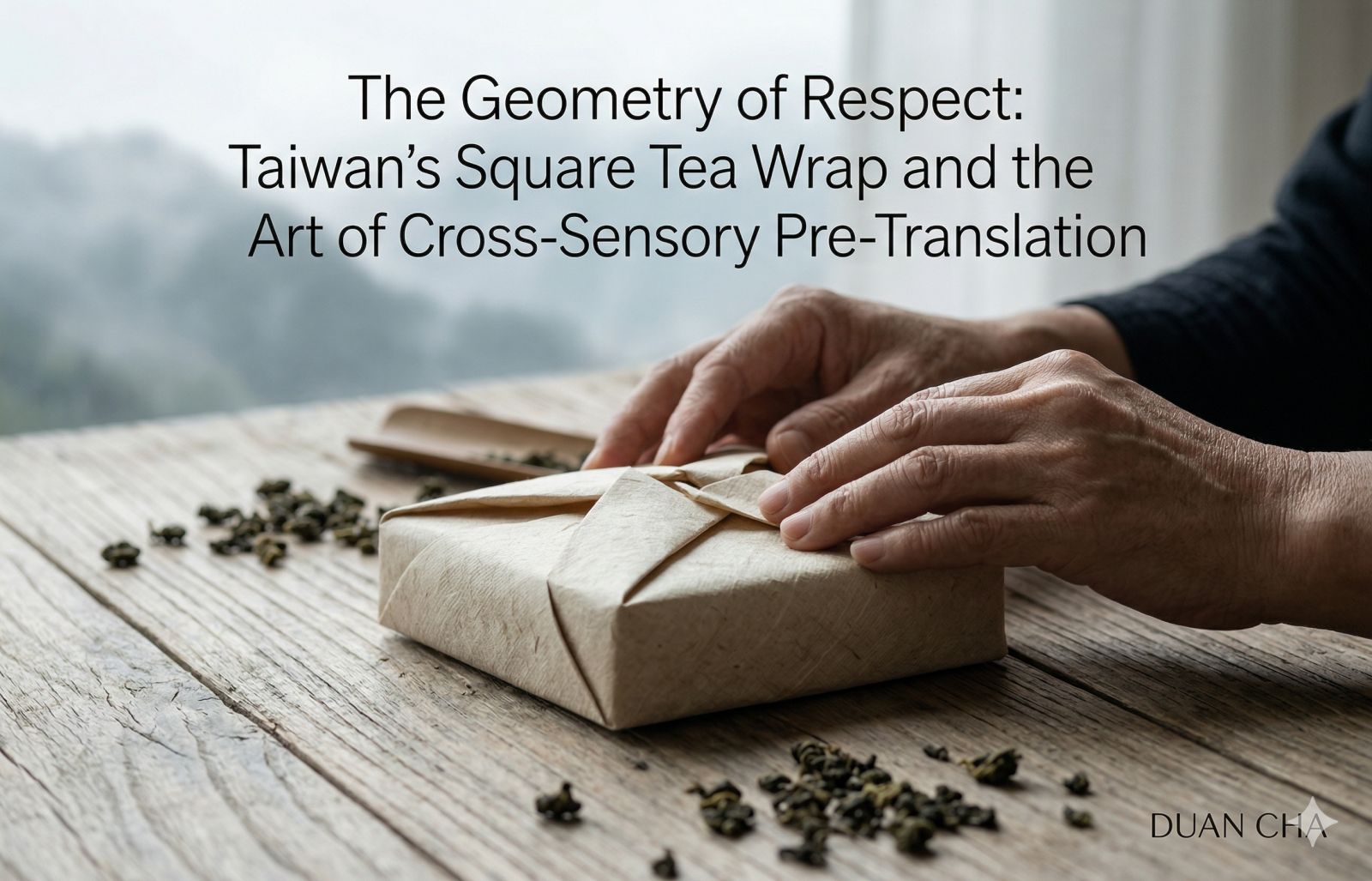
The Taiwanese Four-Square Wrap is a masterpiece of minimalist architecture. Artisans use two distinct layers of Mao-bian paper (毛邊紙), a breathable yet resilient paper made from local bamboo fibers. Without a single drop of glue or a piece of tape, the paper is hand-folded into a perfectly tensioned, geometric square. This double-layer folding technique creates an isolation chamber—a physical seal that locks out the humid island air while allowing the tea to rest in a completely neutral environment.
Through geometric precision, Taiwan conquered the ancient fear of paper, turning a porous material into an impregnable fortress for "Zero Intervention" flavor.
But at DUAN CHA, we believe the Four-Square Wrap is far more than a triumph of storage; it is the ultimate psychological interface. This is where Cross-Sensory Pre-Translation begins.
Long before the water boils, before the tea touches your palate, your brain is already decoding the tea's identity. When you receive a hand-wrapped square of Taiwanese mountain tea, the tasting begins at your fingertips.
As your hands brush against the textured, matte surface of the bamboo paper, you feel a grounded, organic resilience. As you gently pull apart the interlocking folds, the crisp, dry rustle of the paper breaks the silence of the room. This tactile resistance and acoustic clarity are not random; they are the "Pre-Translation" of the tea inside. The crispness of the paper translates the cold, biting mist of the high altitudes; the purity of the fold translates the uncompromising structure of the alpine minerals.
The packaging is the prologue. It filters out the noise of the modern world and prepares your nervous system for the absolute purity of the leaf.
Taiwan’s Four-Square wrap proves that true luxury does not require gold or silk; it requires profound respect for the material.
By taking a humble sheet of bamboo paper and folding it with intention, Taiwanese tea culture created a vessel that protects the soul of the mountain. Today, when you unwrap a parcel of meticulously crafted tea, you are not just opening a package. You are engaging in a centuries-old dialogue of Cross-Sensory Pre-Translation—where the sound and touch of paper whisper the truth of the tea, long before the first drop is poured.


