


2021年09月01日
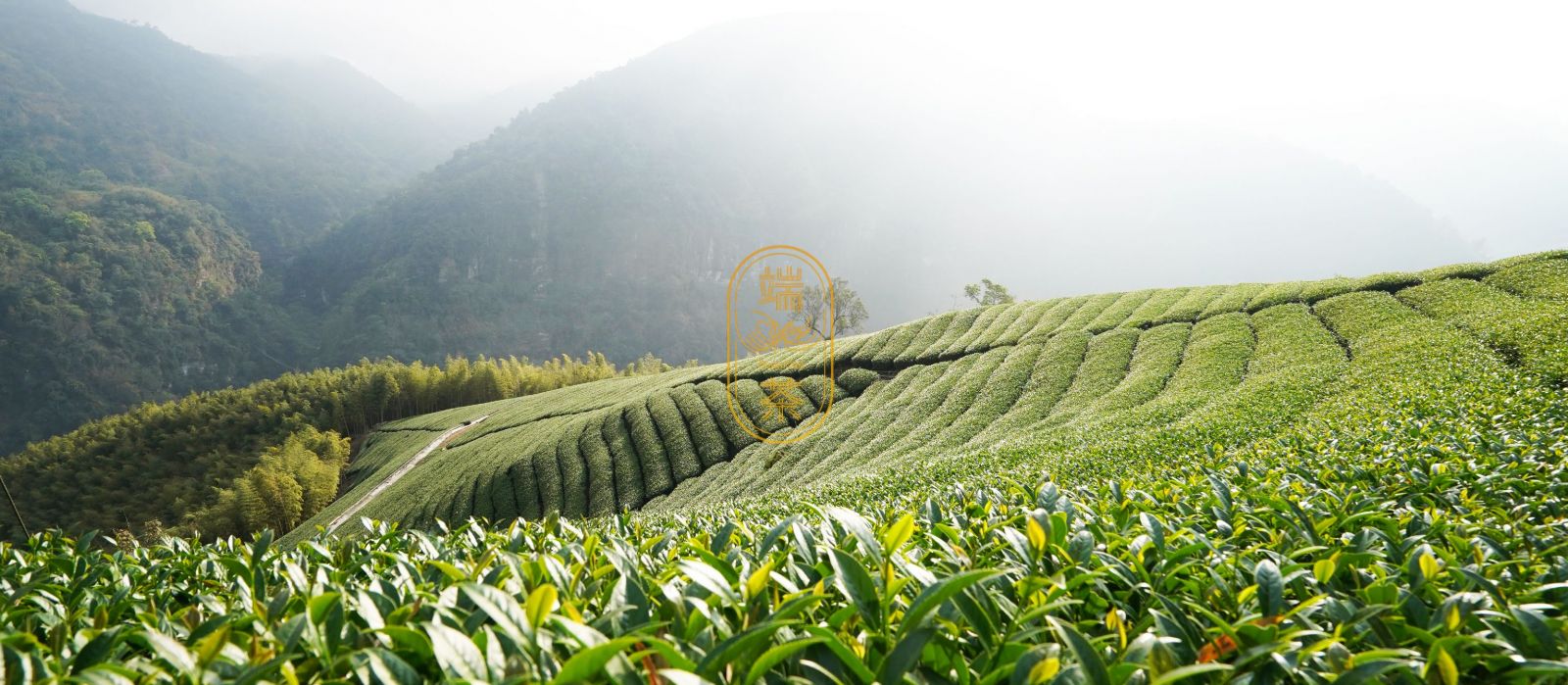
在東方美學的語境裡,技藝的終點往往不在於形式,而在於「氣格」。古人云「人如其字」,字跡的枯潤、濃淡與骨力,映射的是書寫者的胸懷;而在端茶的眼中,這份邏輯同樣適用於茶——「茶似其山」。每一泡茶的質地,都是大自然以氣候為筆、土地為紙,由製茶師在火候中寫就的感官書法。
有些茶友偏愛那種入口即覺雄渾飽滿、底韻在喉頭後發先至的滋味。這樣的茶,最像顏真卿的楷書。顏體的特點在於「蠶頭燕尾,雄強渾厚」,每一筆都充滿了向外擴張的生命力,結構紮實,不求機巧而以氣勢取勝。
這類型的茶,通常來自於經歷過適度發酵與精準焙火的茶品。當茶湯入口,那種沉穩的重量感不是壓迫,而是一種厚積薄發的支撐力。飲後回甘從喉嚨深處緩緩升起,綿長且有力,這便是顏氏書法中那份「大氣磅礡」的感官轉譯。
與顏體的雄渾相對,有些茶友則鍾情於明亮宜人、清香悠然的境界。香氣在入口的一瞬便已在鼻腔與齒頰間綻放,滋味清靈,這正如宋徽宗的「瘦金體」。瘦金體之妙,在於其橫劃收筆帶鉤,撇如匕首,每一筆都極其纖細卻神采奕采,明朗、銳利且不帶一絲贅肉。
這類茶往往來自於海拔極高的巔峰茶區,如端茶引以為傲的梨山系列。高海拔的冷冽空氣與稀薄大氣,賦予了茶葉極高的芬香物質。這種茶的滋味是「發揮於前」的,它的香氣具有穿透力,如同瘦金體那飄逸卻堅韌的筆觸,清香悠然,讓人感受到一種貴氣十足、絕塵而去的優雅。
若是談到日月潭的紅玉紅茶,那份熱情奔放、甜水蜜韻的動態感,非懷素的狂草莫屬。懷素寫字「驚蛇走虺,驟雨狂風」,在極致的流動中展現出不可遏止的生命張力。紅玉紅茶那獨特的薄荷與肉桂香,在入口的一瞬間便如同狂草般在味蕾上縱橫揮灑,不拘一格,靈動且富有衝擊力。那份蜜韻的收放,正是書法中「連綿不斷、氣勢相生」的最佳註解。
然而,端茶最情有獨鐘的,是雍正皇帝的書法。雍正的字,不同於康熙的健勁或乾隆的圓潤,他的書風「骨氣清剛,矩度嚴謹」。每一筆都交代得清清楚楚,不浮誇、不浮躁,卻在沉靜中透出一股不可撼動的威儀與中正。
杉林溪的冬茶,大抵具備這種神韻。冬茶因為低溫生長緩慢,其滋味不是奔放的,而是內斂且深邃的。它的香氣如空谷幽蘭,它的質地如溫潤之玉,一切都安排得恰到好處,不偏不倚。這是一份「節制美學」的極致表現,正如雍正的筆墨,在最嚴謹的法度中,展現出最深沉的靈性。
茶席如紙,茶湯如墨。端茶之所以堅持「頂真」的茶園管理與製茶技術,是為了在那杯茶湯裡,為您保留下這份關於山林的書寫。無論您喜愛的是顏體的雄渾,還是雍正的內斂,端茶都在這方寸之間,為您翻譯出最純粹的、屬於台灣高山的生命風骨。
In East Asian aesthetics, technique is rarely the final destination. What matters instead is qige—bearing, moral density, the atmosphere that lingers after form has done its work. The adage “the writing resembles the person” was never a comment on handwriting alone; it was an ethical judgment. Brushstrokes were read as evidence of inner structure.
At DUAN CHA, this logic is extended beyond paper and ink. Tea, too, carries bearing. But unlike calligraphy, its author is not singular.
Tea resembles its mountain.
Each infusion becomes a collaborative script: climate as brush, terrain as paper, and the tea maker as the hand that decides when to pause, when to press, when to withdraw. What emerges is not flavor as data, but flavor as inscription—a material trace of geography, labor, and restraint.
Some teas announce themselves immediately—dense, grounded, with a center of gravity that settles deep in the throat before sweetness reveals itself. These teas are not persuasive; they are declarative.
They recall the regular script of Yan Zhen (Qing dynasty), whose calligraphy is often described through metaphors of architecture rather than gesture. His strokes are thick, outward-reaching, structurally indisputable. There is no attempt at elegance; authority is achieved through mass.
Teas of this temperament are typically the result of deliberate oxidation and controlled roasting. Their texture carries weight without heaviness. The aftertaste does not rush; it rises slowly, insistently, like a column bearing load.
This is not refinement as delicacy.
It is refinement as resolve.
In contrast, there are teas that privilege immediacy—aroma first, structure later. Their presence is vertical, not grounded. They rise.
This sensibility finds its visual parallel in Emperor Huizong's Slender Gold script, where each line is taut, tensile, and unapologetically thin. The beauty lies in exposure: nothing is concealed, nothing padded.
High-altitude teas—such as those grown in Lishan—operate similarly. Cold air and reduced pressure encourage the accumulation of aromatic compounds, producing fragrances that cut cleanly through the palate. These teas perform at the front of the mouth, their elegance defined by lift rather than depth.
Like Huizong’s script, they are aristocratic, aloof, and perilously precise.
One misjudgment, and the line collapses.
If regular script speaks of order and Slender Gold of discipline, Huaisu's wild cursive belongs to another register entirely—speed, intoxication, rupture.
This is the language of Sun Moon Lake Ruby Black Tea.
Its natural notes of mint and cinnamon arrive with theatrical confidence, sweeping across the palate in continuous motion. Sweetness follows not as conclusion, but as echo. The experience resists segmentation.
Huaisu’s calligraphy was never meant to be read character by character. It was meant to be felt as momentum. Ruby Black Tea behaves the same way: less a composition than an event.
Control is present—but invisible.
What remains is velocity.
The calligraphy of the Yongzheng Emperor occupies a quieter, more unsettling space. Neither flamboyant nor soft, it is marked by discipline so complete it becomes severe. Each stroke is resolved, economical, devoid of flourish.
This is the sensibility DUAN CHA most closely aligns with.
Winter tea from Shanlinxi shares this temperament. Grown slowly in low temperatures, it offers no immediate spectacle. Aroma emerges late. Texture is smooth but firm, sweetness restrained.
Nothing exceeds its function.
This is not minimalism for effect, but minimalism as governance—an aesthetic of boundaries, of knowing exactly how much is enough. Like Yongzheng's script, the power lies in what is refused.
To approach tea this way is to reject tasting notes as sufficient explanation. Flavor descriptors flatten what is, in truth, a complex negotiation between environment, technique, and cultural inheritance.
At DUAN CHA, tea is not optimized.
It is edited.
Tea gardens are managed not to maximize output, but to preserve coherence. Roasting is calibrated not for intensity, but for legibility. Each cup becomes a surface on which the mountain writes—and the tea maker decides how much of that writing remains visible.
Tea tables, like desks, are sites of inscription. What rests in the cup is not merely taste, but position: a stance toward nature, authority, and time.
Whether one is drawn to the structural confidence of Yan Zhen, the altitude-driven sharpness of Huizong, the kinetic excess of Huaisu, or the disciplined restraint of Yongzheng, each tea reveals a different ethics of making.
DUAN CHA does not seek to unify these voices.
It preserves their difference.
Because to honor the mountain is not to simplify it—
but to let it write, in its own hand.


